
B.Sc. in Pharmacy
Program Profile
College of Pharmacy is an institution of learning, research and public utility to serve and develop human health by offering good quality of pharmaceutical education in order to prepare professionally skilled and qualified pharmacists who can serve the community in health institutions, factories, pharmaceutical establishments, and disseminate health education and awareness among people.
Occupational profiles of graduates
Pharmacy graduates are equipped with a strong foundation in pharmaceutical sciences, clinical practice, drug development, and patient-centered care. Their scientific knowledge, communication skills, and problem-solving abilities prepare them for diverse careers across healthcare, industry, research, and regulatory fields, enabling them to adapt to the growing demands of the pharmaceutical and healthcare sectors.
Typical roles for graduates include:
1. Community Pharmacist: Dispensing medications, counseling patients, managing minor ailments, and promoting safe, effective use of medicines.
2. Hospital Pharmacist: Working within healthcare teams to optimize drug therapy, prepare specialized medications, manage clinical pharmacy services, and support patient care in hospitals.
3. Clinical Pharmacist: Providing medication therapy management, participating in clinical rounds, monitoring treatment outcomes, and ensuring evidence-based therapeutic decisions.
4. Industrial Pharmacist: Engaging in pharmaceutical manufacturing, quality control, quality assurance, formulation development, and production of medicines.
5. Regulatory Affairs Specialist: Ensuring compliance with national and international regulations, preparing drug registration dossiers, and supporting market authorization of pharmaceutical products.
6. Research and Development (R&D) Scientist: Conducting scientific research in drug discovery, formulation, clinical trials, biotechnology, and pharmacological testing.
7. Medical Representative / Pharmaceutical Sales Specialist: Promoting medications to healthcare professionals, providing scientific information, and supporting product awareness and safe use.
8. Public Health Pharmacist: Participating in health promotion, disease prevention programs, vaccination campaigns, and public health policy support.
9. Academic / Lecturer: Teaching in pharmacy schools, supervising students, and contributing to research in pharmaceutical sciences.
10. Entrepreneur / Consultant: Establishing pharmaceutical businesses (e.g., pharmacies, labs), offering consultancy, or developing healthcare and wellness services.
Qualification awarded
Bachelor of Science in Pharmacy
Length of programme
5 Years
Number of credits
300 ECTS credits
Mode of Study
Full time on campus
Read more about the programme
Get detailed information about the programme requirements, courses, credits, and educational objectives as a PDF file.
Program Educational Objectives (PEOs)
- Provides pharmacy students with a strong foundation in biological and health sciences while fostering critical thinking, digital literacy, ethical responsibility, and the ability to apply knowledge in pharmaceutical, clinical, and healthcare settings.
- Cultivates understanding of drug action, pharmacokinetics, toxicology, and therapeutic strategies, preparing students to analyze pharmacological interventions, practice ethically and legally, and contribute to pharmaceutical sciences through evidence-based research and professional practice.
- Emphasizes patient-centered pharmaceutical care by integrating pharmacotherapy, pathology, public health, and ethics, enabling students to make effective therapeutic decisions, promote community health, and collaborate within multidisciplinary healthcare systems.
- Focuses on drug formulation, manufacturing, biopharmaceutics, and advanced delivery systems, combining theory with practical skills to develop safe, effective, and patient centered products while emphasizing regulatory standards and clinical as well as industrial applications.
- Develops knowledge of chemical, biochemical, and analytical principles underlying drug design and therapeutic mechanisms, while strengthening laboratory skills, critical thinking, and evidence-based interpretation for pharmaceutical research, quality control, and modern pharmacy practice.
Program Learning Outcomes
Graduates of the College of Pharmacy will be able to:
1. Utilize integrated knowledge from pharmaceutical, chemical, biological, and clinical sciences to elucidate drug action mechanisms and implement evidence-based medication therapy across diverse healthcare settings.
2. Provide comprehensive pharmaceutical care through thorough patient assessment, individualized therapy planning, therapeutic monitoring, and interprofessional collaboration to optimize medication safety and efficacy.
3. Communicate effectively with patients and healthcare professionals using culturally appropriate strategies, while demonstrating leadership abilities, ethical decision-making, and advocacy for optimal patient outcomes.
4. Develop and implement health promotion strategies addressing community needs, considering social determinants of health and employing preventative approaches to improve population health outcomes.
5. Design and manage medication use systems to ensure safety, quality, and cost-effectiveness through pharmacoeconomic evaluation, quality assurance protocols, and regulatory compliance in various practice settings.
6. Apply principles of pharmaceutical technology to develop and evaluate dosage forms, drug delivery systems, and quality control processes in accordance with regulatory requirements and manufacturing standards.
7. Critically evaluate scientific literature, conduct pharmaceutical research, and translate findings into practice improvements while demonstrating proficiency in research design, analysis, and scholarly communication.
8. Engage in continuous professional development, adapt to evolving healthcare practices, identify service innovation opportunities, and contribute to the advancement of the pharmacy profession.
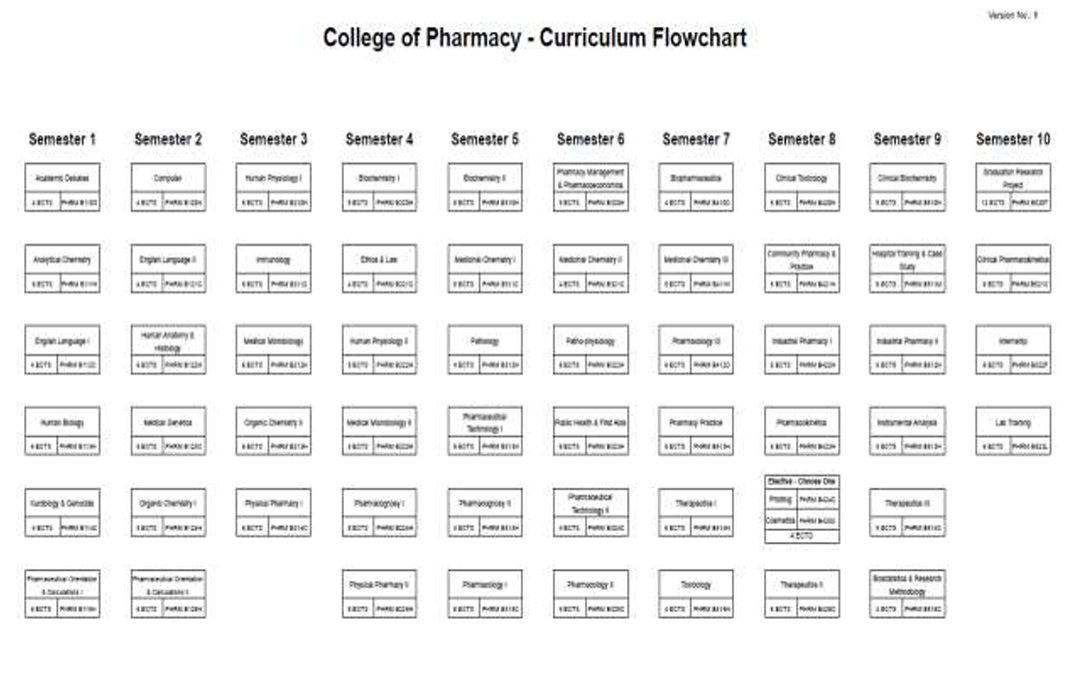
Programme structure diagram with credits
Yearly Timeline
Sept. 1, 2026
⚠️ First year students start around mid-October
⚠️ First year students start exams around 20 of January
July 1, 2027
Check out the full academic calendar on UoD's webstie.
Programme Coordinator

Assistant Lecturer in Assistant lecturer Kurdish Language, Basic Sciences, College of Pharmacy (CPHR)
Basic Sciences
College of Pharmacy
University of Duhok
Apply to the Programme
Public undergraduate admissions in the KRG region are managed centrally by the Ministry of Higher Education through the online ZankoLine portal (regayzanko.com). After Grade 12 Baccalaureate results are released, high schools provide students with unique login credentials to rank their preferred universities and B.Sc. majors during a 10–14 day registration window. Final placement is automatically determined by the student's Grade 12 average, subject choices, and department capacity.